The Ofrenda: A Guide to Honoring Día de los Muertos at Home
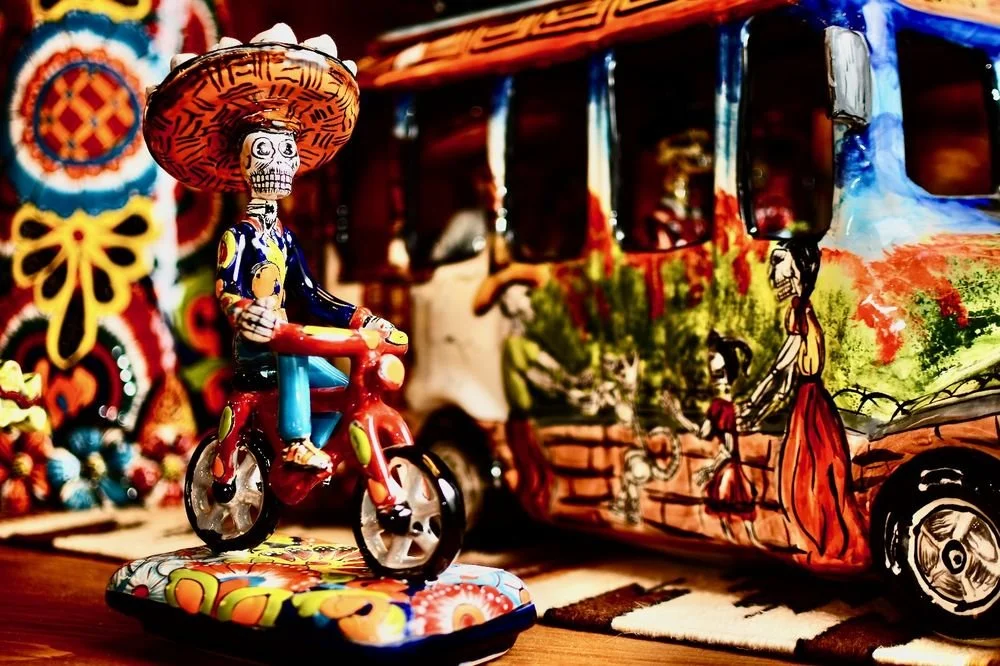
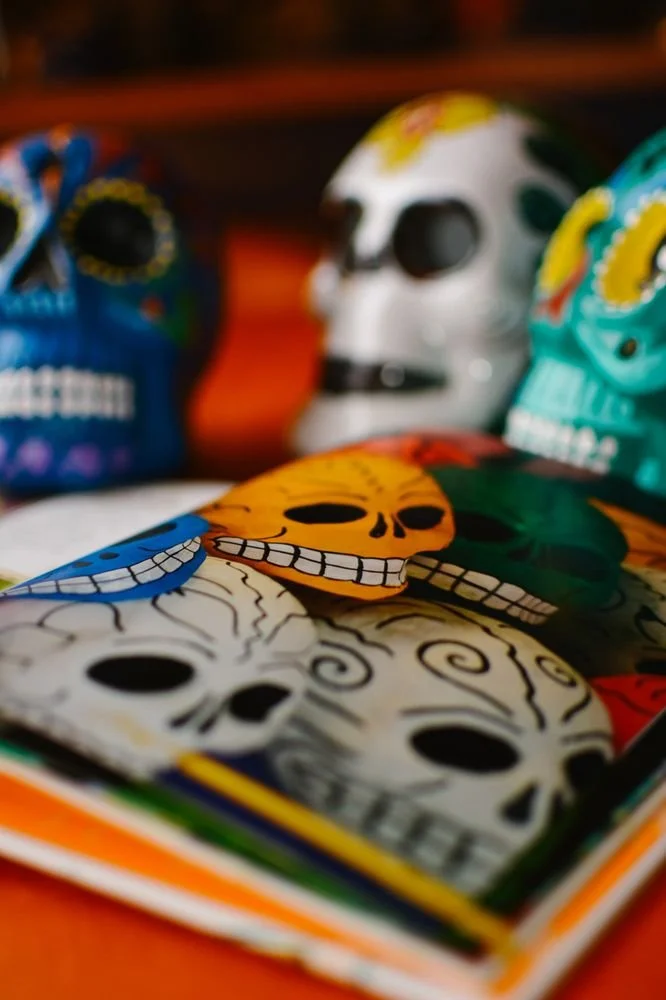
Handmade Sugar Skulls from Mexico - Milagros Rústicos in Arizona
Each year on November 1st and 2nd, families across Mexico welcome their loved ones home. Día de los Muertos is not a somber occasion, and it is far from a Mexican Halloween. It is a celebration of love and memory, and of the belief that those we miss return to us for a night of warmth, food, music, and light.
At the heart of it is the ofrenda, a home altar built to welcome them. Whether you grew up building one or simply admire the tradition, creating an ofrenda is a beautiful way to slow down and remember the people who shaped your life.
The Elements of an Ofrenda
Every ofrenda is personal, and traditions vary from region to region, but a few elements appear again and again:
Cempasúchil (marigolds). Their vivid gold color and distinctive fragrance are said to guide spirits home. Petals are often scattered in a path leading to the altar.
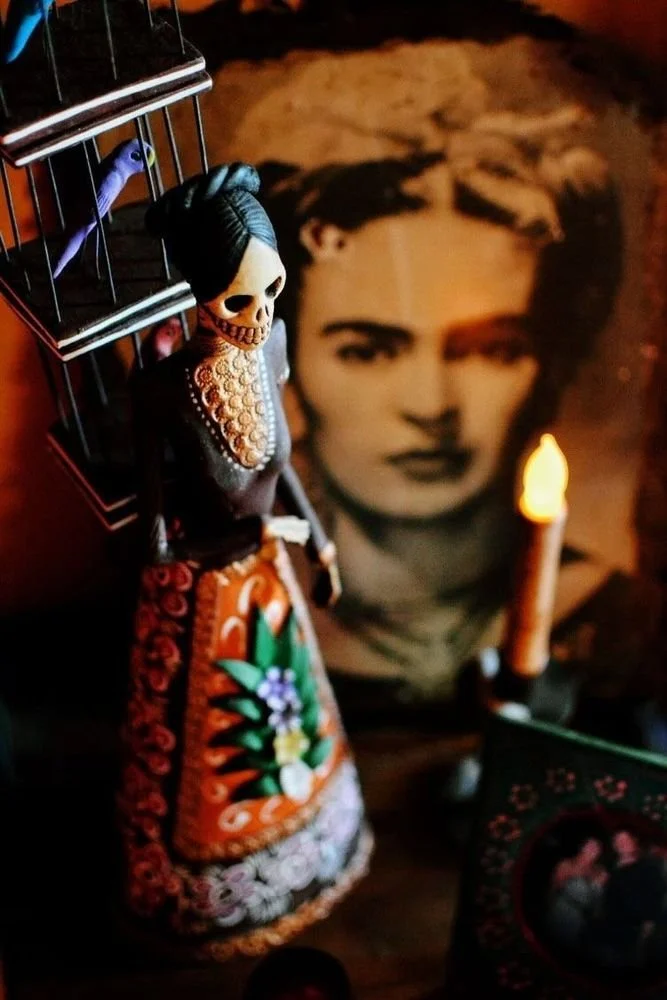
Candles and light. Each flame lights the way and honors a soul. Candlelight is the glow of the entire ofrenda.
Photographs. Portraits of those being remembered take the place of honor.
Papel picado. Delicately cut paper banners flutter above the altar, representing the fragile, fleeting nature of life.
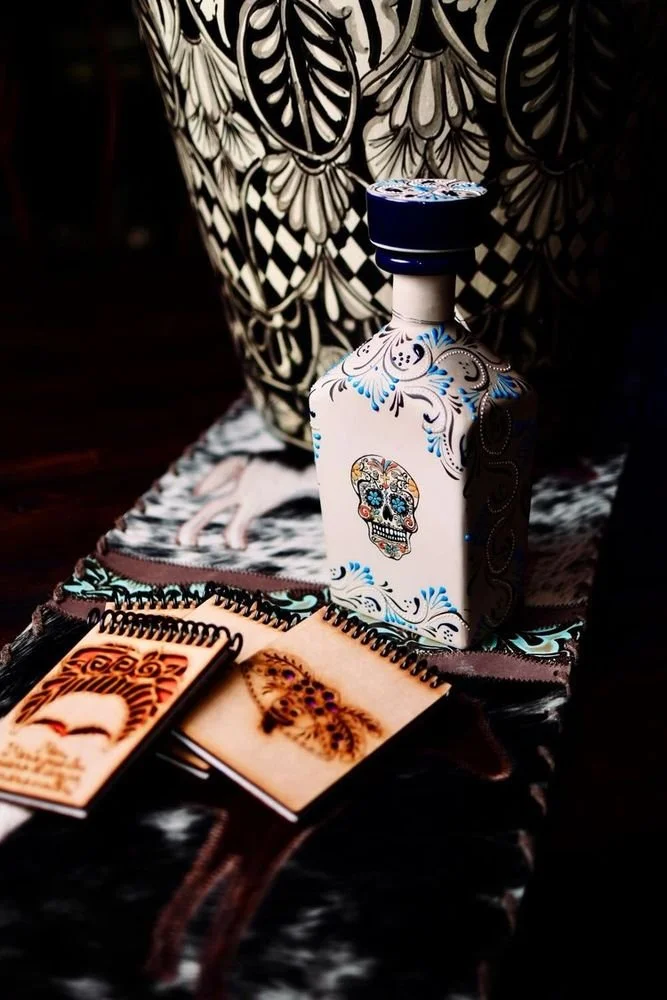
Favorite foods and drinks. Pan de muerto, a glass of water, a small cup of coffee or tequila, whatever they loved most. The aromas are meant to welcome them.
Copal incense. Its smoke carries prayers and clears the path between worlds.
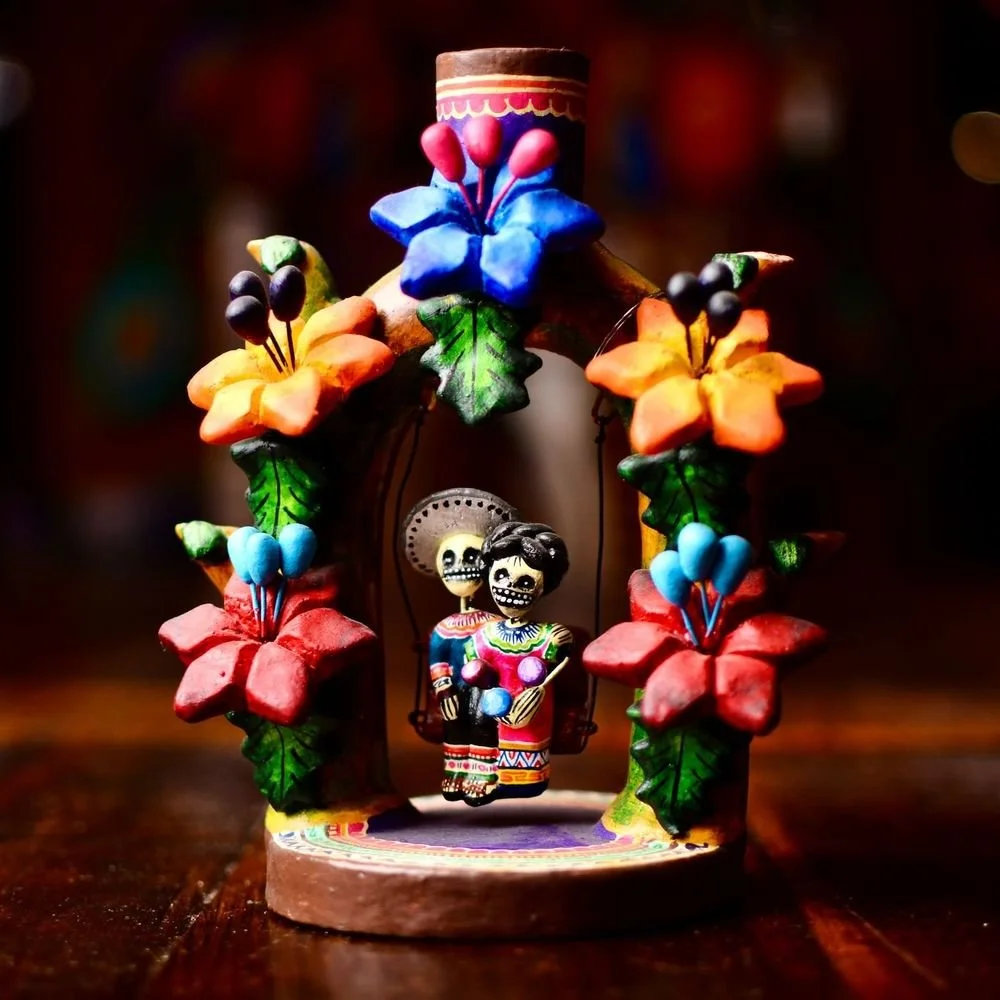
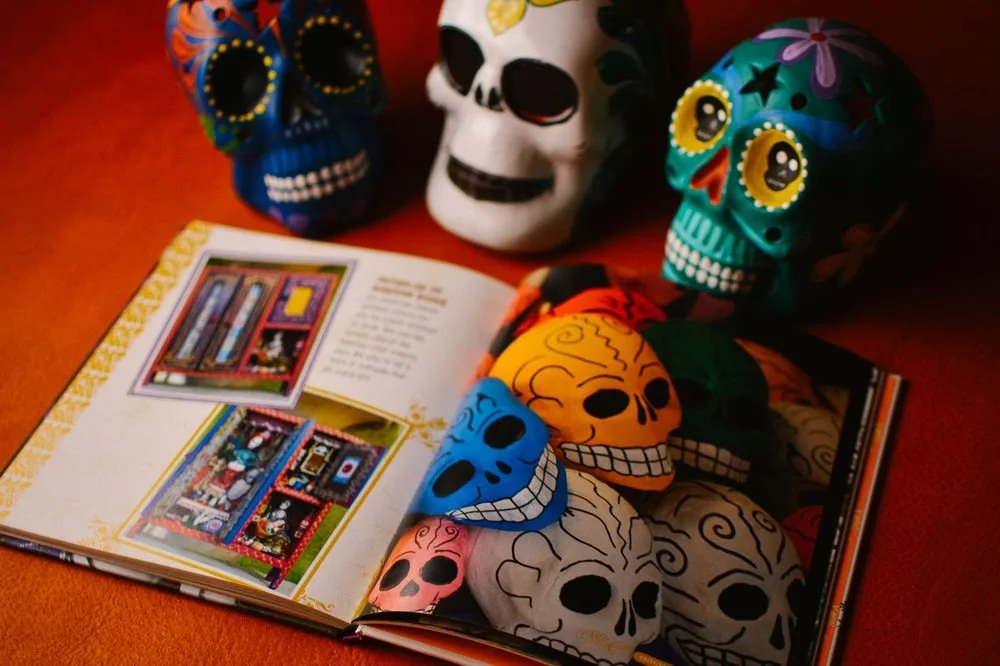
Calaveras. Sugar skulls, often inscribed with a name, are playful and affectionate reminders that death is part of life.
Building Your Ofrenda
Begin with a table, a console, or a quiet corner of a room. Many ofrendas are built in tiers, commonly two or three levels, so a sideboard or a few sturdy boxes draped in linen make a good foundation. Place photographs at the center, then layer candles, flowers, and offerings around them. Add the small objects that tell their story: a favorite book, a well-worn hat, a cherished recipe card.
There is no perfect version. What matters is intention. Build it slowly, and let it be a little imperfect and a lot personal.
The Beauty of the Handmade
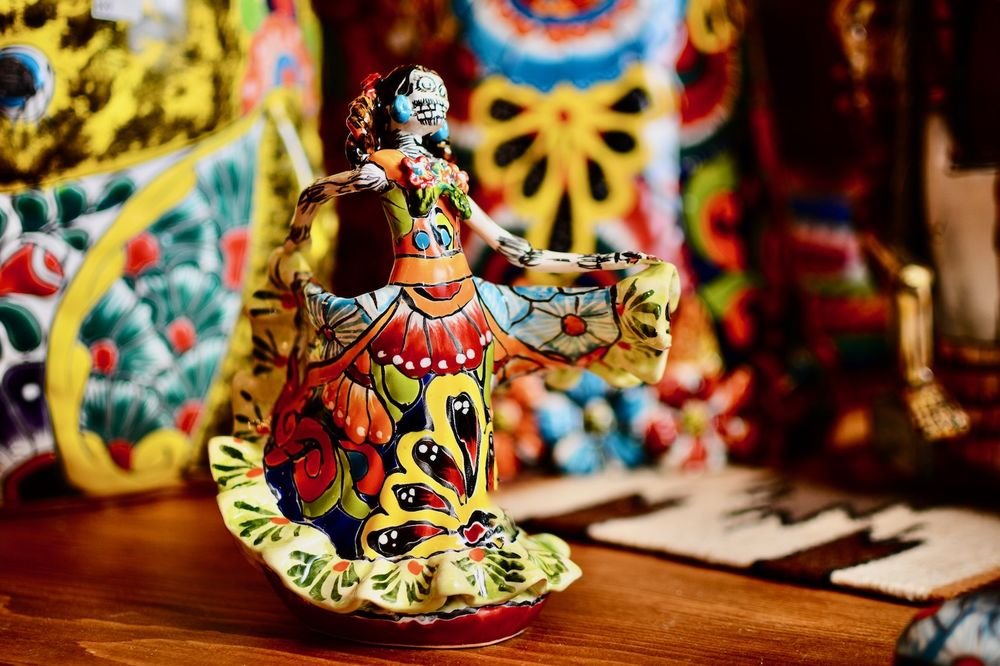
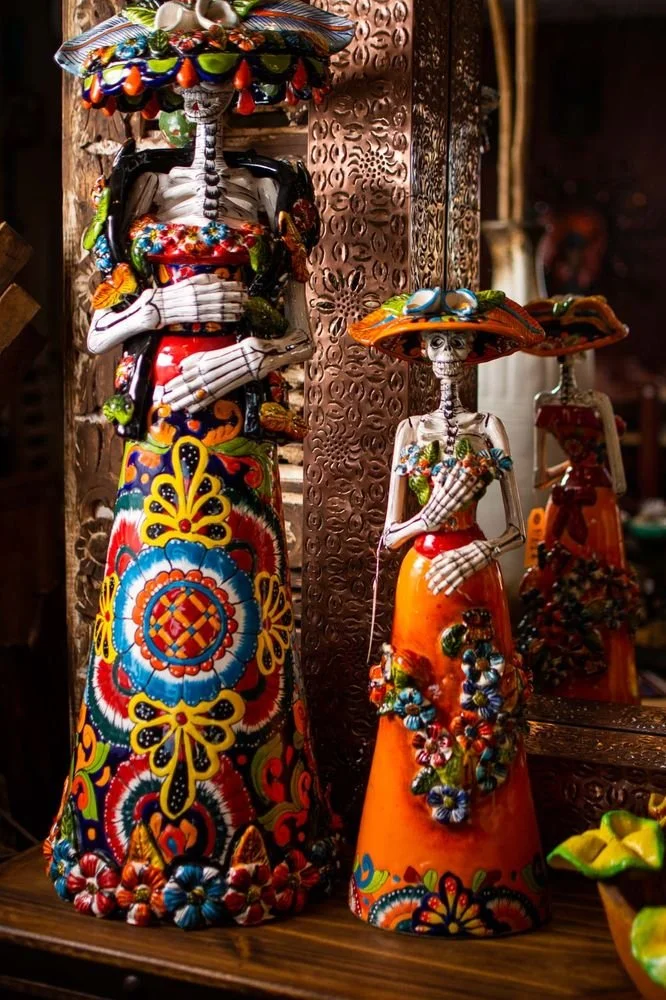
An ofrenda is a place for things that carry meaning, and handmade pieces have a way of doing exactly that. A hand-painted Talavera vessel holds marigolds with quiet grace. A wrought iron candleholder gives the flame a place to stand. A carved wood table gives the whole altar a steady, lasting foundation. Each was shaped by an artisan's hands, and that care belongs beside the memories you're honoring.
Every piece on our floor is one of a kind, and our selection changes often. If you're building an ofrenda this year, we'd love for you to come in and see what's here.
Stop by our Mesa showroom at Dana Park to browse handmade décor from artisans across Mexico.